

Apricot Preserves
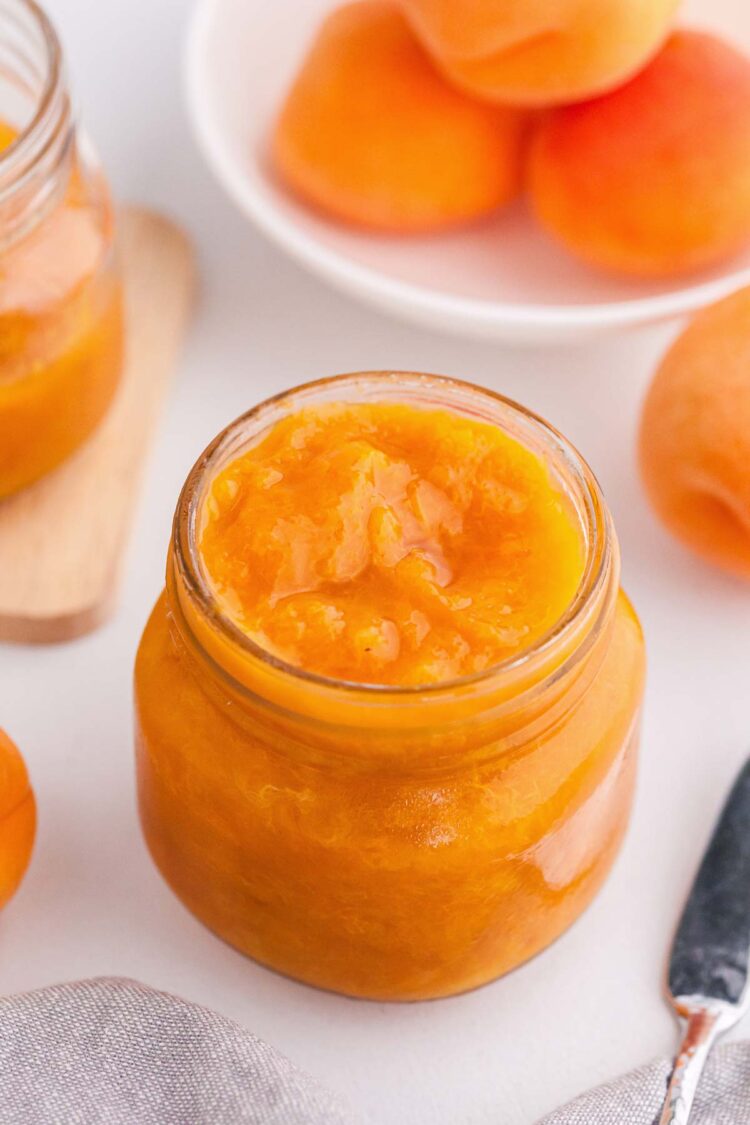
These apricot preserves are made with apricots, honey and lemon juice, with no pectin needed. They have a concentrated apricot flavor and are only as sweet as your fruit requires.
When your husband comes home with 4 pounds of apricots that only he will eat (because I weirdly don’t like raw apricots)? Time for preserves!
This is my favorite thing to make with apricots. You just put them, unpeeled, in a saucepan with honey or sugar and lemon juice, let them cook until thickened, and you’re done. It’s about as easy as preserving fruit gets.
Just one warning, though. If your apricots don’t really taste like anything, neither will the preserves. The sweetener will of course help, but it won’t magically create apricot flavor. I’ve had some pretty terrible apricots in the past, so I’m just saying.
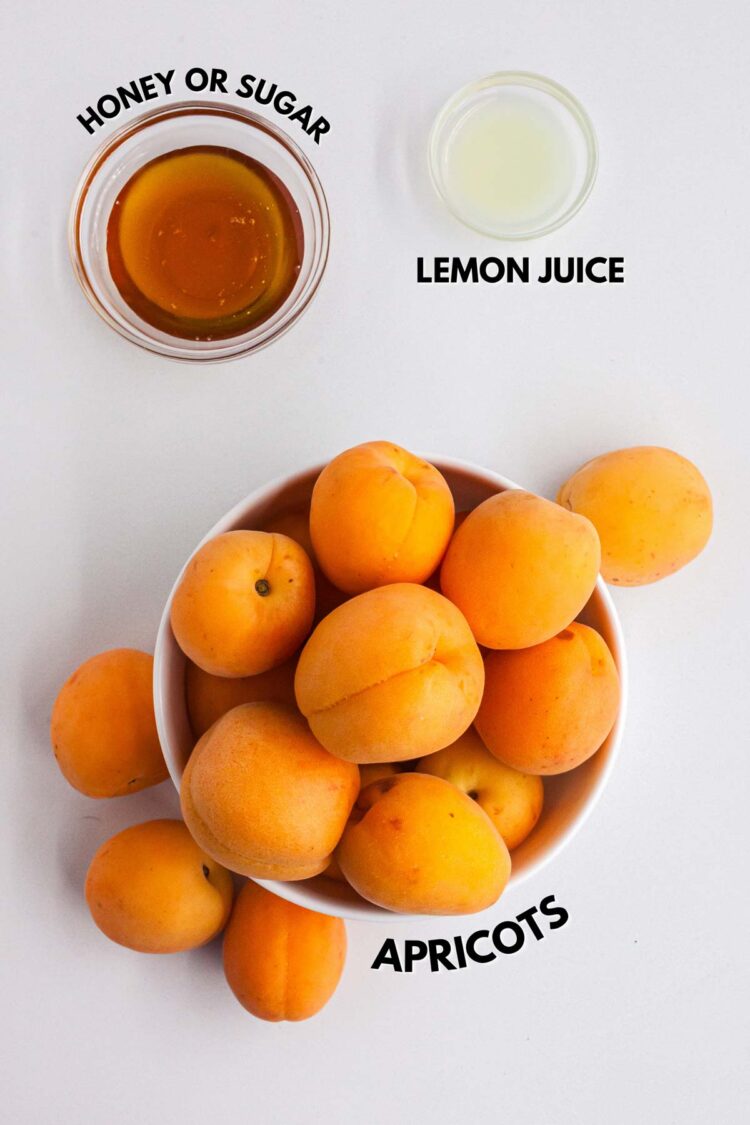
Ingredients
Please scroll down for the full recipe.
- Apricots – use ripe, flavorful apricots. You don’t need to peel them because the skins break down completely during cooking.
- Honey – 3 tablespoons is enough if your apricots are very sweet, but you may want more if they’re tart or bland. Add it to taste once the fruit has started breaking down.
- Lemon juice – helps the natural pectin work so the preserves thicken properly. It also adds acidity, which helps the preserves keep better. You won’t taste lemon in the finished preserves.
How to Make Apricot Preserves
Place a small plate in the freezer before you start cooking. You’ll use it later to test whether the preserves are ready.
Wash and pat the apricots dry. Remove the pits and quarter the apricots.
Add the apricots, honey and lemon juice to a medium or large saucepan. Cook over medium-high heat, stirring occasionally, until the fruit has broken down and the mixture has thickened. For me, this took about 25–30 minutes, but your cooking time may be quite different depending on the apricots and the size of your saucepan.
Once the apricots have broken down, taste the preserves carefully. If your apricots aren’t very sweet, add more honey to taste.
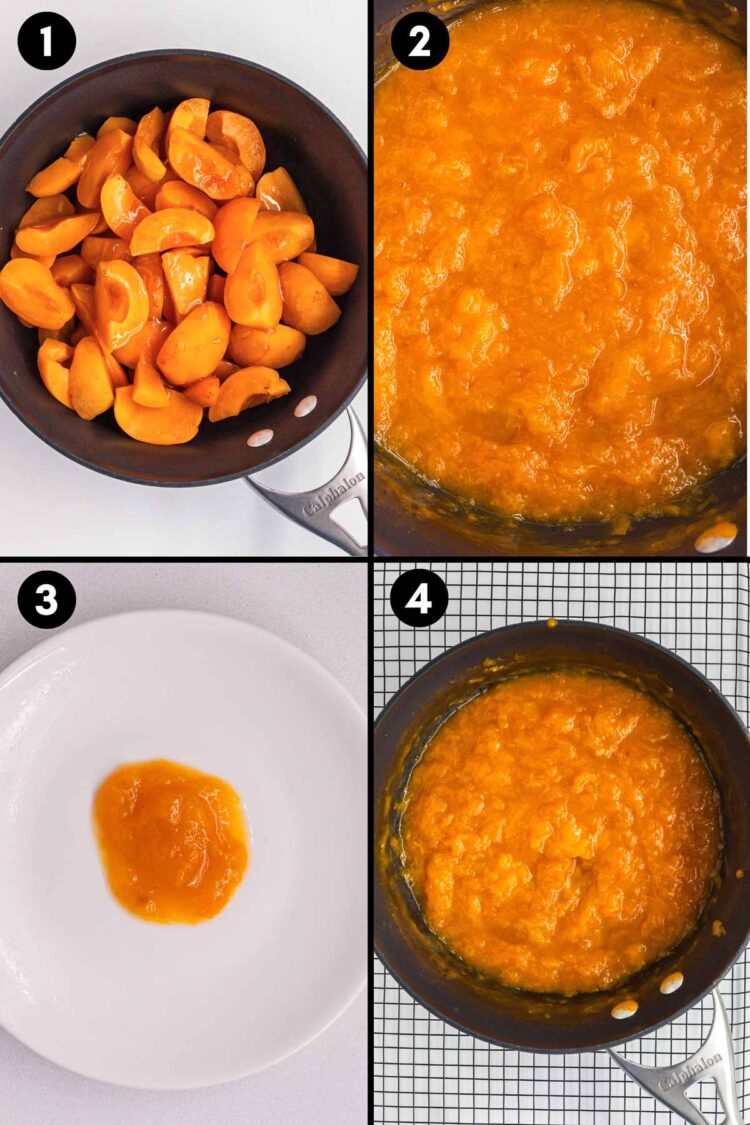
When you think the preserves are ready, spoon a small amount onto the cold plate. Let it sit for about a minute, then push it with your finger. If it wrinkles and holds its shape, it’s ready. If it still looks runny, continue cooking and test again.
Remove the saucepan from the heat and place it on a wire rack. Let the preserves cool completely, which will take about 2 hours. Then refrigerate for at least 4 hours before using.
Why you don’t need pectin
Apricots naturally contain pectin, so you don’t need to add commercial pectin to make these preserves thicken. Cooking the fruit down concentrates the natural pectin while also removing enough water to give the preserves their spreadable consistency.
The lemon juice provides the acidity that helps the pectin gel properly. That’s also why the lemon juice is important even though you won’t taste lemon in the finished preserves.
Keep in mind that the preserves will continue to thicken as they cool and chill. They shouldn’t be as thick in the saucepan as you want them to be when they’re cold.
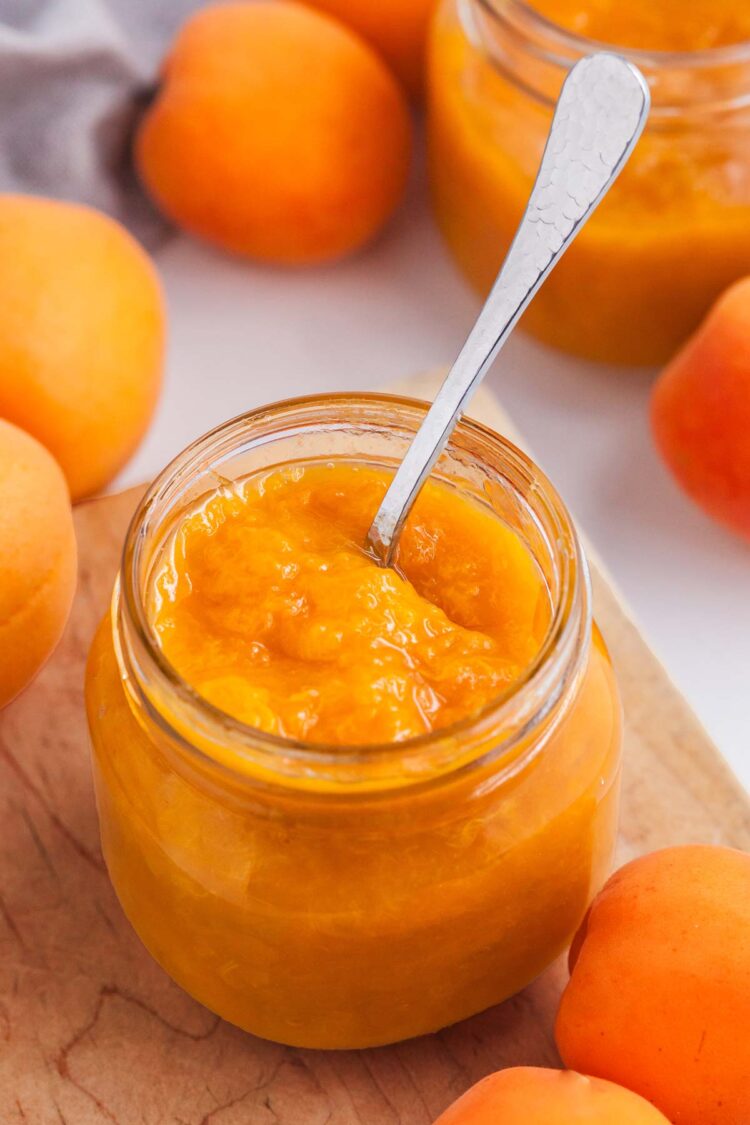
- Taste before adding more honey – apricots can vary dramatically in sweetness. If yours are exceptionally sweet, 3 tablespoons may be plenty.
- Use a larger saucepan if you have one – more surface area allows the water to evaporate more quickly, which can shorten the cooking time.
- Don’t rely on the cooking time alone – the preserves can take noticeably longer or shorter depending on how juicy your apricots are and how wide your saucepan is. Use the cold-plate test to decide when they’re ready.
- Don’t cook them until they’re as thick as you want them – the preserves will thicken considerably as they cool and then chill. They should still look somewhat softer in the saucepan than you want them to be when cold.
How to Use Apricot Preserves
They’re especially good spread on toast, layered with yogurt and granola, or used as a filling or topping for desserts.
My Peach Tartlets use apricot jam as a glaze for the fresh peaches, and these preserves would also be great spooned over this Cheesecake Tart or served alongside slices of cheesecake.
I think they’d also be great swirled into this Honey Ice Cream or French Vanilla Ice Cream.
How to Store
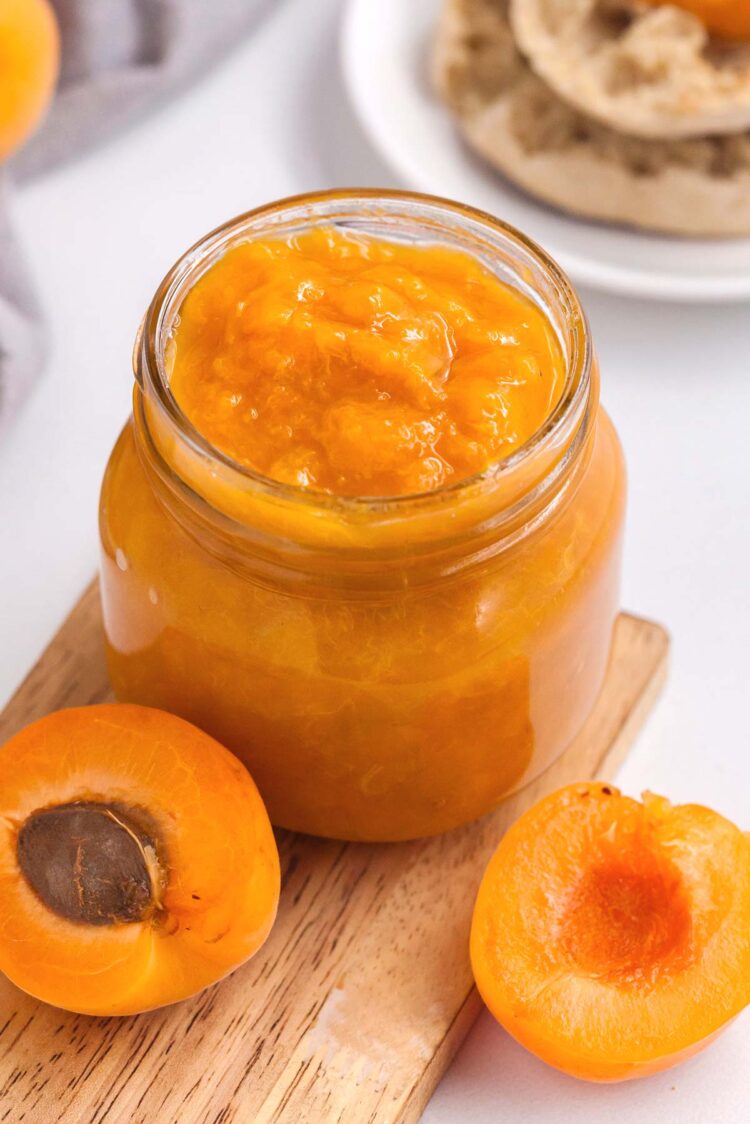
Transfer the cooled preserves to a clean jar or container and refrigerate.
I recommend using them within about 1 week. For longer storage, freeze the preserves instead. Leave a little room at the top of the container if you’re freezing them because they will expand.
More Jams and Preserves
All of these recipes are made without commercial pectin, relying instead on the fruit’s natural pectin and cooking time to achieve the right consistency. They’re all small-batch recipes, too, so you don’t have to worry about canning.
3-ingredient Apricot Jam
Ingredients
- 24 ounces (680 grams) apricots
- 3 tablespoons (60 grams) honey or granulated sugar plus more to taste
- 1 tablespoon lemon juice
Instructions
- Place a small plate in the freezer before you start cooking.
- Wash and pat the apricots dry. Remove the pits and quarter the apricots.
- Combine the apricots, honey and lemon juice in a medium or large saucepan. Cook over medium-high heat, stirring occasionally, until the apricots have broken down and the mixture has thickened. This took me about 25–30 minutes, but the cooking time will vary depending on your apricots and saucepan.24 ounces (680 grams) apricots, 3 tablespoons (60 grams) honey or granulated sugar, 1 tablespoon lemon juice
- Once the apricots have broken down, taste the preserves carefully and add more honey or sugar if needed. The amount of sweetener you'll need depends on the sweetness of your apricots. Mine were exceptionally sweet, so 3 tablespoons was enough.
- When you think the preserves are ready, drop a small spoonful onto the frozen plate. Let it sit for about a minute, then push it with your finger. If it wrinkles and holds its shape, the preserves are ready. If not, continue cooking and test again.
- Remove the saucepan from the heat and place it on a wire rack. Let the preserves cool completely, about 2 hours.
- Store in the refrigerator for about 1 week. For longer storage, freeze the preserves.
Notes
- The final yield can vary depending on how long you cook the preserves and how much water your apricots contain. I always get around about 1 1/2 cups of preserves.
- The nutrition information provided is calculated as a courtesy and is only an estimate. I am not a licensed nutritionist or dietitian. For the most accurate nutritional data, consult a professional or use your preferred calculator.



I live in California USA and don’t understand your measurements. Can you translate into cups and spoonfuls? I can’t wait to make a jam that keeps the skins on and doesn’t use sugar. Thanks in advance
Hmm. I’m a little puzzled as I’m not sure which measurement is confusing. There are only 3 ingredients. Two are listed in tablespoons (I’ve never heard of a spoonful measurement?) and one is listed in grams, but also ounces. When you buy apricots, ounces are listed on the package.
I’m thinking of using Monkfruit to lightly sweeten the jam instead of honey. Has anyone tried that? What I’ve heard is it doesn’t affect the flavor at all but does add some light sweetness.
Thanks
~Peggy S
I haven’t tried that but I think it must depend on what brand of monkfruit sweetener you use. In everything I’ve tried it so far, I really didn’t like the taste. I’m not sure if it’ll work in this recipe since all you’re doing it simmering the apricot + sweetener. Honey thickens as you boil it but monkfruit won’t. So I really have no idea. I’m so sorry I can’t be more helpful!
Great recipe! Can you tell us how you freeze the left overs? Thanks.
I’m sorry for just now seeing your question! I just freeze it in little Ziploc bags or silicone baby food containers (which is definitely more practical if you happen to have one on hand!).
Hi thanks for the Apricot recipie. I cook for a diabetic wife and jam is normally a no-no. But just made batch 1 and my wife insisted I made batch 2 LOL.
And as you want to learn unusual words heres one for you.
We both send you a BIG CWICH for the recipie ( spoken like Butch as in BUTCHer. Its Welsh. No we are not Welsh but have lived in this amazing country (Part of UK) for over 20 years After moving back to the U.K from Berlin & leaving British Army..
Keep up the good work and I shall keep an eye on the blog
Hi! What a nice word (I read about it here). I’m happy that you and your wife enjoyed the jam! I hope you made her her second batch. ;) Thanks so much for your comment! Hope you enjoyed your time in Germany. :)
I loved how easy this recipe is! I made this jam this morning. But my apricots weren’t sweet to start with so I added a little more honey. As I taste tested it, it still wasn’t sweet, so I added a little more. Then it started to turn bitter! Any thoughts on why this happened??
Hi! That’s so strange. I have no idea why it would turn bitter. When I continue adding honey to jam, it just keeps getting sweeter so I’m puzzled. Perhaps remove a bit to a bowl, add a little more honey and see what happens? Sorry I don’t have a more helpful answer for you!
I am just now finding this information on making apricot jam. I live in Central Texas and as far as I know we do not grow apricots. Can I use dried?
Thank you!
Pamela Dragoo
I unfortunately don’t think that’d work. They’re much sweeter than fresh apricots and I believe they’d need a lot of added liquid. Sorry about that! I grew up in Texas and remember there being apricots. Maybe ask the produce manager? Perhaps they’re in a strange place!
Can you can this type of jam? Of course to eat it fresh is divine but would love to have for winter months and gifts.
I’m sorry but I don’t have any canning experience! I always freeze my leftovers, which I know doesn’t help you as far as gifts go. Sorry about that!
Hi, just found this recipe, do you think I could freeze it if I made a big batch. My tree is full of apricots and I want to try and use them all. :)
Yes! It freezes well. :) I hope you’ll enjoy it!
Trying it now…cut recipe in half as I didn’t have enough apricots. Smells divine…Can’t wait to taste! Thanks for this easy jam!
I’m so happy that you’re trying it out! I hope you’ll enjoy it. :) Let me know how it comes out!
Haha I love that I taught you claggy! And the brownies must have been bad if they were stodgy?! Well you have the rest of our photos now! And maybe next time will even be in Poland :-) not too far away, hopefully!
Natasha – Well I'm happy to learn that you liked it! And you taught me a new word. Claggy. I learned stodgy recently from an English colleague who was describing brownies. You non-Americans have some nice words to describe sweets! Love it. And yeah, if only I could have added a picture of us! Boo. That'll have to wait until next time. Next time will be in Australia, I guess. :)